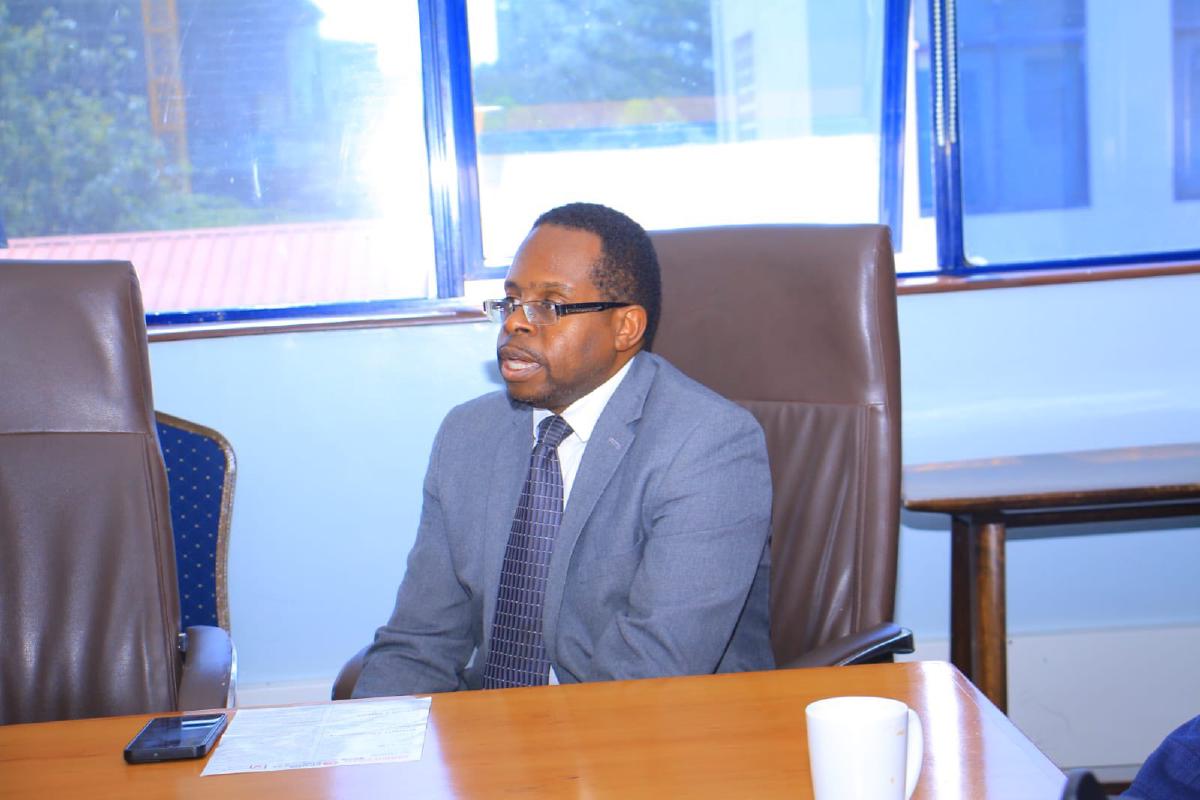
Senior Counsel Charles Kanjama has been elected President of the Law Society of Kenya (LSK), becoming the 52nd person to hold the office following a closely watched election held on February 19, 2026, with results announced the following day. For many in the legal fraternity, the outcome was more than a routine leadership transition — it was the ascent of one of Kenya’s sharpest legal minds to a seat the country cannot afford to leave in ordinary hands.
Kanjama garnered 3,728 votes, defeating Peter Wanyama who secured 2,616 votes, while outgoing Vice President Mwaura Kabata finished third with 2,086 votes. The election, supervised by the IEBC, was conducted across nearly 40 towns nationwide.
The Weight of the Seat He Now Occupies
The presidency Kanjama inherits is not a quiet one. His predecessor, Faith Odhiambo, served as the 51st LSK President and made history as only the second woman to hold the office — a milestone that carried enormous symbolic weight. But her legacy went far beyond symbolism. Her courage during the Gen Z protest period saw her call out the police for acts of brutality that human rights reports linked to the deaths of numerous protesters — a defining moment that placed the society firmly between the state and the citizen. She went on to earn the ICJ Jurist of the Year award, recognition as one of Kenya’s most impactful women, and the 2024 CB Madan Laureate distinction.
Yet her tenure was not without controversy. Her decision to accept President Ruto’s appointment to a government panel on police brutality compensation later divided the legal community, with some members arguing that it risked undermining the society’s independence. It was a reminder that the bar for LSK leadership is as much about navigating political minefields as it is about legal acumen.
Can Kanjama Fill the Void?
Those who know Kanjama well say the question is not whether he can fill Odhiambo’s shoes — but whether he will chart an equally impactful path of his own. Where Odhiambo was defined by her fire and public confrontation of state power, Kanjama brings a different but no less formidable quality: intellectual depth. With over two decades of practice, he brings a rare blend of legal, commercial, and governance expertise to the role. He previously served as the inaugural elected Chairman of the LSK Nairobi Branch and was elevated to Senior Counsel in 2022 — a distinction reserved for advocates of exceptional ability. Those who have worked alongside him describe a constitutional thinker whose grasp of rights and governance architecture is without peer in his generation.
His first words after victory signalled a presidency that would prize institutional cohesion. “All lawyers are winners — those who voted for me and those who voted for my opponents, because they took part in a democratic process,” he said. He then outlined four pillars to guide his leadership: strengthening the rule of law, safeguarding the independence of both the bar and the bench, improving welfare and practice conditions for lawyers, and enhancing internal engagement within the society. He also placed the empowerment of civil rights and the active encouragement of democratic space at the heart of his agenda, with Kenya’s 2027 General Election already in his sights as a key platform for the LSK’s democratic role.
This is where the two leaders converge most naturally. Odhiambo fought for democratic space from the streets, in courtrooms, and in front of cameras. Kanjama appears poised to do so through doctrine and strategy — using the full intellectual weight of the Senior Bar to anchor Kenya’s democratic framework as the country approaches another high-stakes election cycle.
A Worthy Torchbearer
Odhiambo herself expressed confidence in the transition. “His record of dutiful service to the society and contributions to the development of governance in Kenya make him a worthy torchbearer of the LSK’s vision and mandate,” she said, adding that he inherits “a united, stable and forward-looking society which can achieve great success if steered diligently and tactfully.”
That is perhaps the most fitting summation. Faith Odhiambo built a society that showed up, spoke out, and refused to be intimidated. Charles Kanjama now inherits that momentum — and with the intellectual firepower and institutional experience he brings to the role, there is every reason to believe the LSK’s voice will not only endure, but deepen.
A formal handover is expected at the society’s annual general meeting in March.